
Overweight: the earlier we act, the better we protect the future
On the occasion of World Obesity Day, 4 March 2026, the Queen Fabiola University Children’s Hospital (HUDERF) wishes to highlight a key message: prevention and early management of overweight in children are crucial for their long-term health.

Excess weight during childhood significantly increases the risk of diseases in adulthood, including type 2 diabetes, cardiovascular disease and musculoskeletal disorders, as well as psychological and social difficulties.
Acting early reduces these risks and gives children the best possible chance to grow up in good health.
At the Queen Fabiola University Children’s Hospital (HUDERF), the Clinique Poids Junior – Multidisciplinary Centre for Childhood and Adolescent Obesity (CPMO) provides a comprehensive, structured and evidence-based approach to care.
More information:
https://www.huderf.be/fr/services/clinique-poids-junior-cpmo-obesite-de-lenfant-et-de-ladolescent
Why are these “golden rules” essential?
Paediatric obesity is a chronic, multifactorial condition. It cannot be reduced to a simple imbalance between calorie intake and expenditure. The quality of food, family environment, stress levels, sleep, daily physical activity and mental health all play a significant role.
Early and multidisciplinary follow-up
Support from a paediatrician within a multidisciplinary team — including physicians, psychologists, dietitians and physical activity professionals — allows risk factors to be identified at an early stage and helps families gradually establish sustainable lifestyle habits.
The objective is not rapid restriction, but the development of long-term balance tailored to the child and their family.
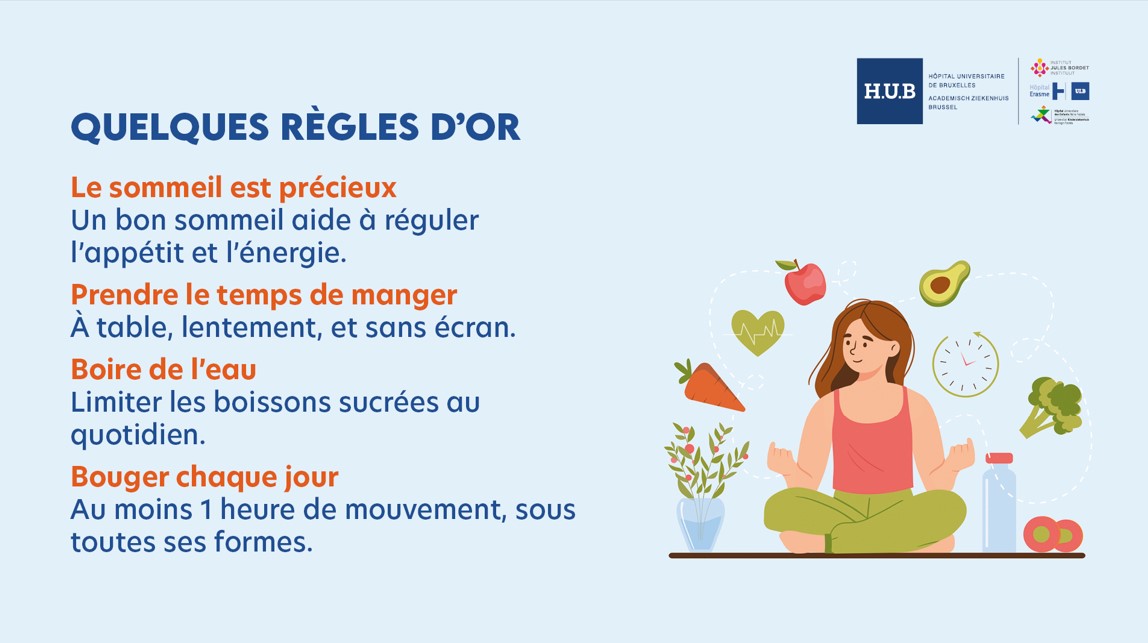
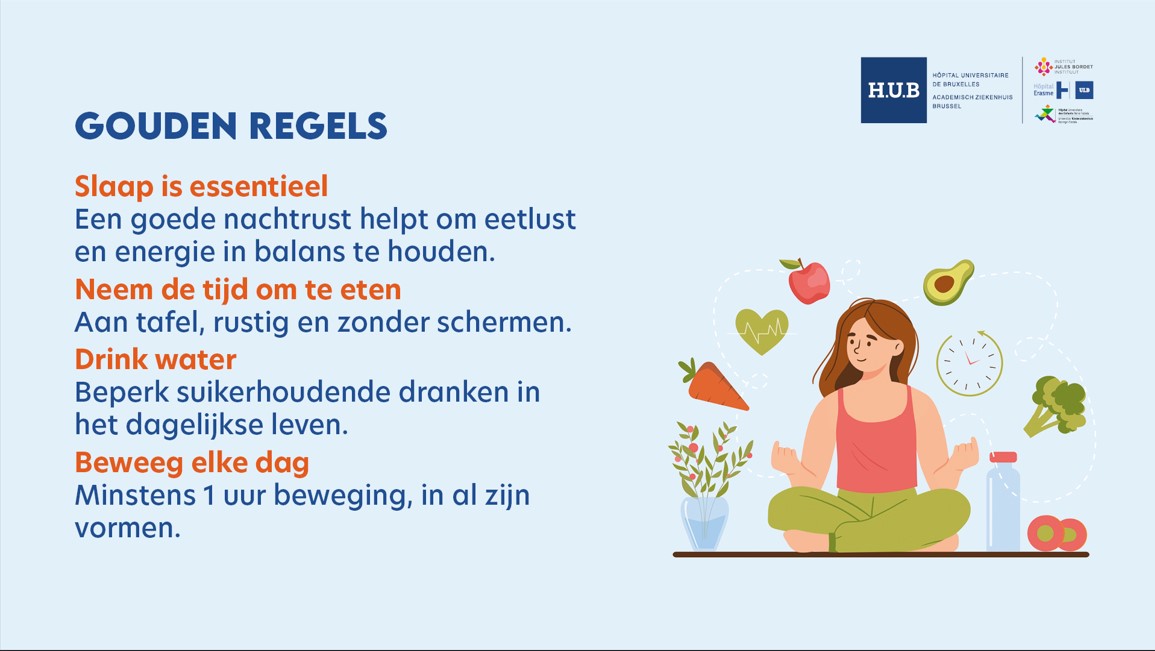
Sleep is essential
Sleep deprivation disrupts hormones that regulate appetite (such as leptin and ghrelin), leading to increased hunger and reduced satiety.
Scientific evidence clearly shows that chronic lack of sleep contributes to weight gain in children.
Adequate sleep also improves emotional regulation and daily energy levels.
Taking time to eat
Eating slowly, at the table and without screens, helps children recognise natural satiety signals.
Meals consumed in front of screens are associated with higher and less mindful food intake.
Slowing down supports a calmer and healthier relationship with food.
Drink water
Sugar-sweetened beverages represent a major source of rapid sugars.
Limiting their daily consumption reduces the risk of excessive calorie intake and protects metabolic health.
Water remains the recommended drink of choice.
Move every day
Children should engage in at least one hour of physical activity per day.
This includes not only structured sport but also everyday movement such as walking, using stairs and active play.
Regular physical activity improves insulin sensitivity, cardiovascular health and self-esteem.
Acting early — together
Childhood obesity is a chronic condition requiring long-term support, expertise and commitment.
Within the CPMO, the Clinique Poids Junior is dedicated to supporting children and their families through a scientific, compassionate and personalised approach.
Because the earlier we act, the better we protect the future.
Endocrinologie pédiatrique | Hôpital Universitaire des Enfants Reine Fabiola