

A child in hospital is still a pupil
The Robert Dubois School in Laeken: 40 years by the side of children

ince the Queen Fabiola University Children’s Hospital (HUDERF) opened in 1986, the Robert Dubois School has supported young patients throughout their care journey. For 40 years, it has enabled hundreds of children and young people to continue their education despite illness, while preserving an essential part of their everyday lives: their life as pupils.
As HUDERF celebrates its 40th anniversary, the history of the Robert Dubois School is a reminder that education has always been an integral part of the Children’s Hospital’s approach.


A history that predates the hospital
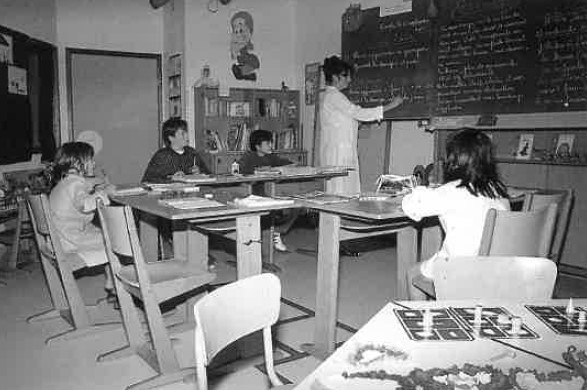
The story began long before HUDERF was established. In 1951, paediatrician Robert Dubois set up the first classes for children in hospital in Brussels. At a time when some hospital stays lasted several weeks or even months, this pioneering initiative enabled young patients to continue learning despite their illness.
In 1955, dedicated classrooms were created at Saint-Pierre Hospital. A small red bus became a symbol of the school, taking children from their hospital rooms to their classes and allowing them, for the duration of a lesson, to reconnect with a familiar part of school life. One fundamental belief already ran through this story and would continue to guide the school over the decades: illness should not interrupt a child’s education.
1986: the Robert Dubois School becomes part of the HUDERF story
When the Queen Fabiola University Children’s Hospital opened in Laeken in 1986, the Robert Dubois School moved alongside it and established its main site at the Children’s Hospital. This marked an important milestone in the school’s development.
As Belgium’s first university hospital entirely dedicated to children and young people, HUDERF was designed from the outset around a comprehensive approach to paediatric care. Medical treatment naturally lies at its heart, but the child’s development, family, well-being and education are also an integral part of this vision. The Robert Dubois School became a key partner in this innovative approach, welcoming children who are in hospital or receiving outpatient care and enabling them to continue their education in the best possible circumstances.
Maintaining links with school and everyday childhood
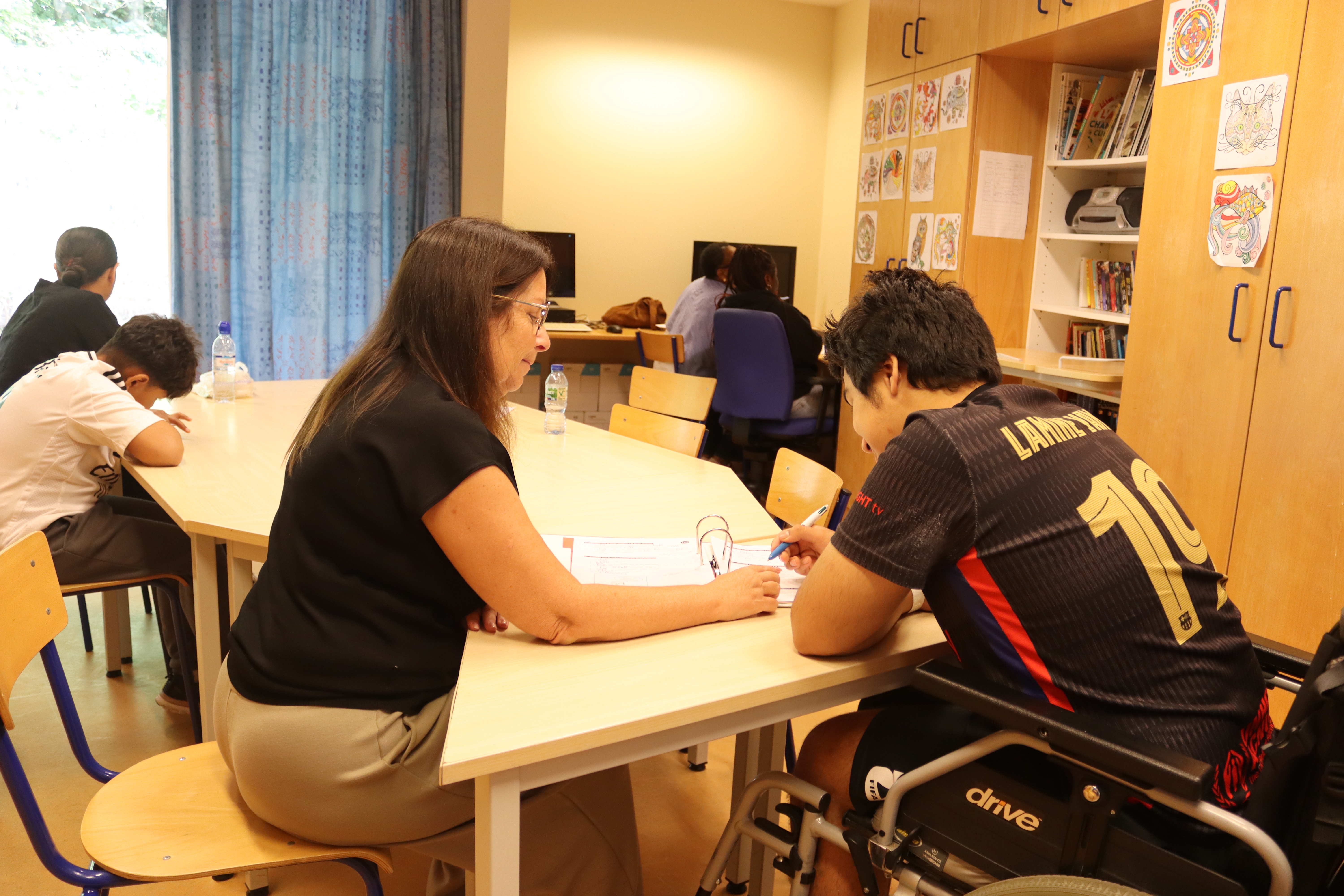
At the Robert Dubois School, education goes far beyond the transmission of knowledge. As soon as a pupil arrives, contact is established with their usual school to ensure continuity in their education. Teachers adapt learning to the pace of treatment, coordinate educational follow-up and prepare pupils for their return to their usual school whenever possible. This role is particularly important for children living with chronic illnesses or undergoing long-term treatment.
The school also provides essential points of reference. In a daily routine shaped by consultations, examinations and treatments, lessons allow children to regain a sense of normality. They continue to learn, create, discover and spend time with other young people. For a few hours, they are not simply patients: they are pupils again.
2002: a new building next to the hospital
During the 1990s, an important ambition began to take shape: to provide the school with its own independent building while maintaining a direct link with the hospital. Under the leadership of René Queysen, the first director of the Robert Dubois School at HUDERF, an ambitious project was developed with the support of the City of Brussels, voluntary organisations, donors and many others who shared this vision. The aim was to create a place specifically designed for children in hospital, bringing together a school and accommodation for families.
By 1998, funding had been secured and construction could begin. The laying of the foundation stone marked the concrete start of this ambitious project. Four years later, in 2002, the new building was officially opened. Connected to the Children’s Hospital by a footbridge, the school has since occupied a unique place within Belgium’s hospital landscape.
The footbridge has become one of the project’s strongest symbols. As children cross it, they symbolically leave the medical environment behind and return to the world of learning, while remaining close to their care teams. More than 20 years after its inauguration, the building remains the tangible expression of a strong conviction: education is an integral part of supporting children through illness.
A school that grows and evolves alongside the hospital
Over the decades, HUDERF has undergone profound changes: the hospital has expanded, new specialties have developed, medical technologies have evolved and care has become increasingly specialised. The Robert Dubois School has evolved alongside these developments, continually adapting its own practices.
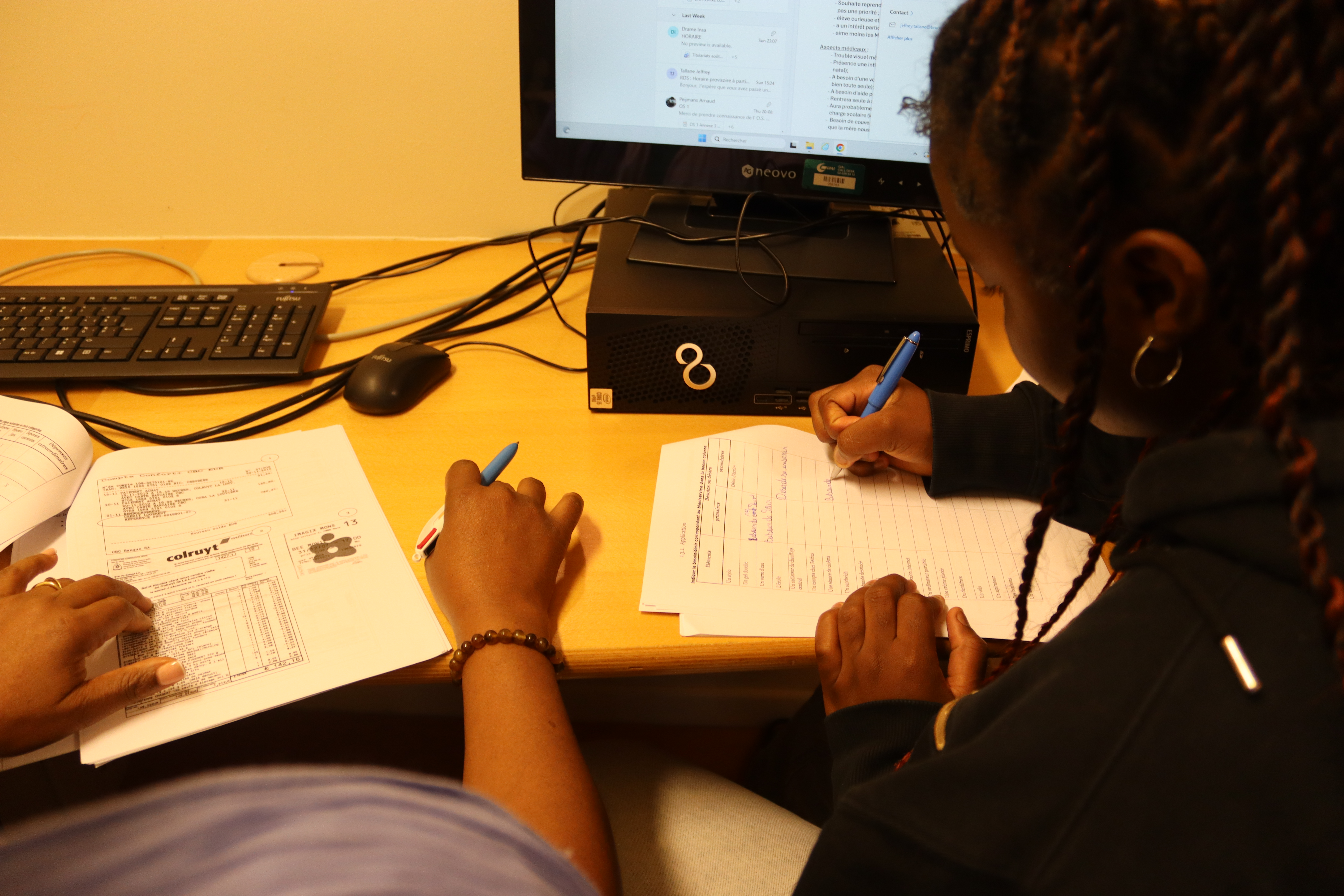
Digital tools have gradually become part of teaching practice, while educational methods have adapted to increasingly complex care pathways and hospital stays that are often shorter but more frequent. Today, the school operates across several sites in Brussels and Walloon Brabant, several of which are directly linked to the Brussels University Hospital (H.U.B.). With more than 90 teachers and educational staff, the school provides individualised education from nursery through to secondary level.
From the pioneers to today’s teams
The history of the Robert Dubois School is above all a human story. From Robert Dubois, who pioneered the first hospital classes in the 1950s, to René Queysen, the school’s first director at HUDERF, several generations of teachers and school leaders have helped shape the institution as it exists today.
Today, this mission is led by Frédérique Fremaux, Director of Nursery and Primary Education, and Jeffrey Tallane, Director of Secondary Education. Together with their teams, they continue to pursue the same goal: ensuring that every child who is ill retains their fundamental right to education, regardless of their condition or the length of their treatment.
For 40 years, a different way of caring for children
Since 1986, the Robert Dubois School has been an integral part of HUDERF’s identity. Alongside doctors, nurses, psychologists, educators, social workers and allied health professionals, its teachers contribute every day to an approach to care that takes every aspect of a child’s life into account.
Forty years after the Children’s Hospital opened, the Robert Dubois School remains one of the clearest illustrations of this philosophy. While the hospital cares for children’s health, the school enables them to continue growing, learning and building their future. For 40 years at HUDERF, learning has been an integral part of care.
Key dates
1951 — Paediatrician Robert Dubois establishes the first classes for children in hospital.
1955 — Dedicated classrooms are created at Saint-Pierre Hospital.
1986 — HUDERF opens and the Robert Dubois School establishes its main site at the Children’s Hospital.
1991 — René Queysen becomes Director of the school at HUDERF.
1998 — The project to build the current school building begins and the foundation stone is laid.
2002 — The current Robert Dubois School building and the footbridge connecting it to the hospital are officially opened.