We're hiring ! Join us and make a difference in our hospitals


Adrenal diseases
Adrenal diseases
Description
The Paediatric Endocrinology Clinic provides diagnosis and follow-up for patients aged 0 to 18 who have an endocrine problem, that is, a condition involving hormones (growth, puberty, pituitary gland, thyroid, adrenal glands, sexual development and bone metabolism). Some rare endocrine diseases require follow-up by several specialists. The doctor–nurse team aims to empower patients to become experts in their disease by informing them and listening to them as effectively as possible. Communication between the various specialists takes place during multidisciplinary meetings at HUDERF, in collaboration with Belgian teams (Belgian Study Group for Pediatric Endocrinology). At European level, the centre is integrated into and actively participates in the ENDO-ERN network established by the European Commission. The underlying idea is as follows: the European Union is a vast reservoir of knowledge and expertise, and it is ideas that travel, for the benefit of patients with rare diseases.

What are congenital adrenal hyperplasia and other adrenal disorders?
The two adrenal glands are located above each kidney. They produce several hormones that are important for maintaining blood sugar levels, adapting to stress, regulating salt levels in the body, as well as hormones that promote hair growth, cause acne, and so on. Some people have adrenal glands that do not function or function abnormally, sometimes from birth and sometimes later in life. These adrenal disorders often require hormone replacement therapy with adrenal hormones to replace the hormones that are lacking. Emphasis is placed on providing information and collaborating with the patient and those close to them.
Our objective?
A patient who has a good understanding of their condition and treatments, and who becomes an active participant in their care
Care management
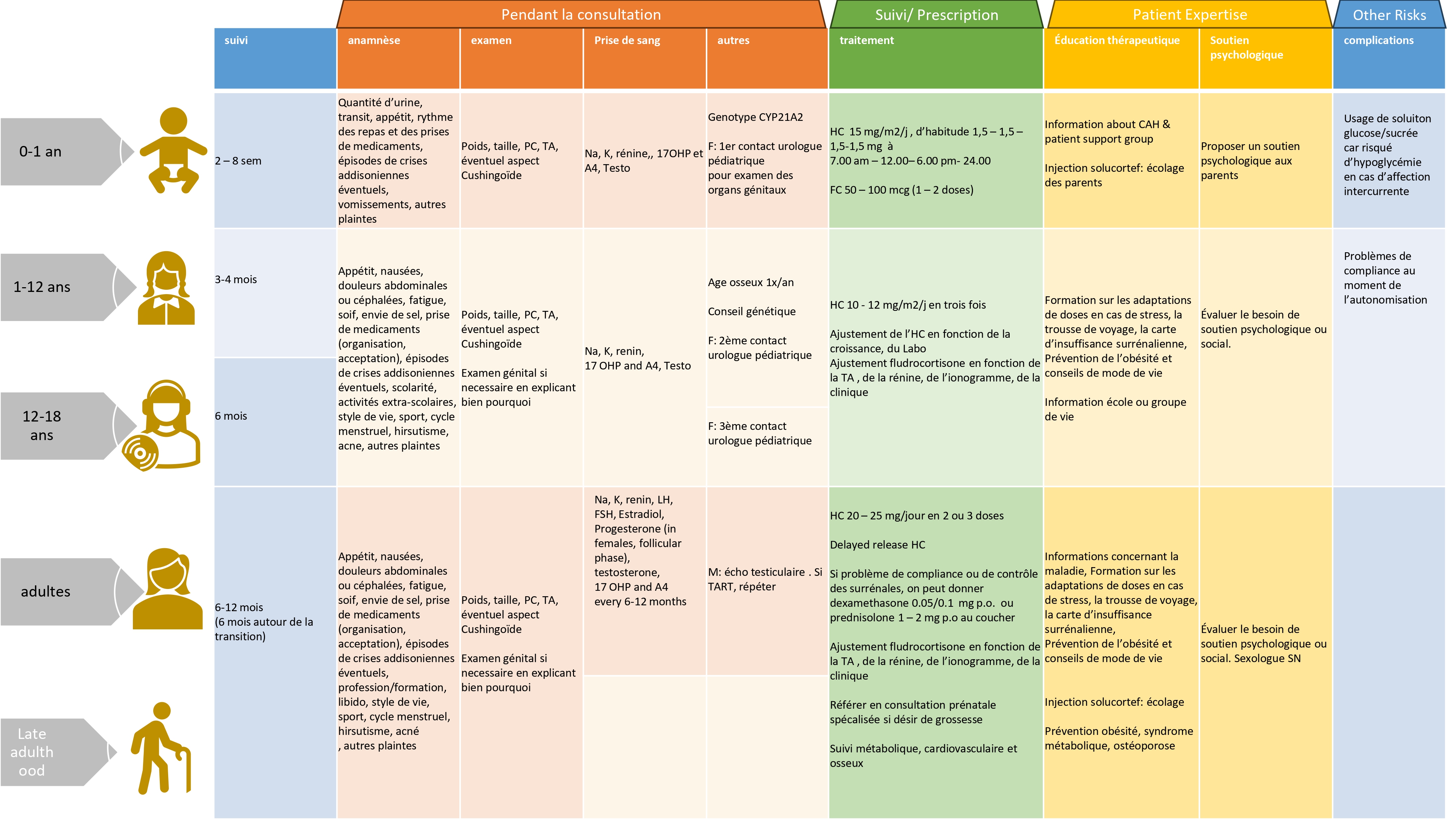
An adrenal condition is often suspected based on the patient’s symptoms (fatigue, cephalalgia, vomiting, skin pigmentation, hypoglycaemic malaise that may progress to seizures, the appearance of body hair or acne, or a surprising growth spurt). Blood test results confirm the diagnosis and also allow follow-up. Regularly taking capsules containing a precise, adjusted amount of replacement adrenal hormones is the cornerstone of management. Sharing knowledge with the patient is essential for effective collaboration aimed at ensuring their well-being while receiving treatment.
Advice
Adrenal hormone treatment can be adjusted according to the patient’s experience, so it is important to communicate clearly with their doctor if new complaints arise or if medication is no longer taken regularly.
Transition to adulthood
Transitioning to adult endocrinology care is also an important step to get right. The endocrinology teams at HUDERF and Erasme Hospital have been working together towards this goal for several years.

Focus
Patients are treated by an accredited paediatric endocrinologist who is an expert in congenital adrenal hyperplasia. Biochemical assessment is carried out in a specialised laboratory equipped with an appropriate LC/MS system. Genetic testing and genetic counselling are performed in a specialised laboratory. 24-hour on-call cover is provided. Annual training on stress dosing is provided by a specialist nurse. A transition plan has been in place for many years.
Useful documents

Associated specialists
- Prof. Cécile Brachet
- Dr Emese Boros
- Dr Fiorenza Ulgiati
- Dr Alfredo Vicinanza
- Dr Sylvie Tenoutasse
- Prof. Claudine Heinrichs
- Prof. Silvia Ciancia
- Prof. Natacha Driessens