

Metabolic Diseases at the Children’s Hospital: 40 Years of Progress
From newborn screening to advances in genetics and the advent of targeted treatments, the management of metabolic diseases in children has undergone profound changes. As HUDERF celebrates its 40th anniversary, we look back at pioneering expertise in which early diagnosis, therapeutic nutrition and medical innovations have gradually transformed the life prospects of young patients.

When screening changes children’s lives
A few drops of blood collected during the first days of life can now reveal a rare disease in a newborn who nevertheless appears to be in perfect health. This procedure, which has become familiar to generations of parents, tells the story of a major transformation in paediatrics: detecting certain diseases before the first symptoms appear and intervening before sometimes irreversible complications develop.
At the Queen Fabiola Children’s University Hospital (HUDERF), the history of the management of metabolic diseases is closely linked to this revolution. Yet it began long before the hospital opened in 1986. Over the decades, advances in biochemistry, therapeutic nutrition and genetics have profoundly transformed the diagnosis and treatment of diseases that were once difficult to identify and sometimes impossible to treat.

The origins of pioneering expertise
In the aftermath of the Second World War, academic paediatrics gradually became established in Belgium. In Brussels, Professor Robert Dubois championed what was then a highly modern approach to child healthcare: a discipline in its own right, combining care, teaching and research.
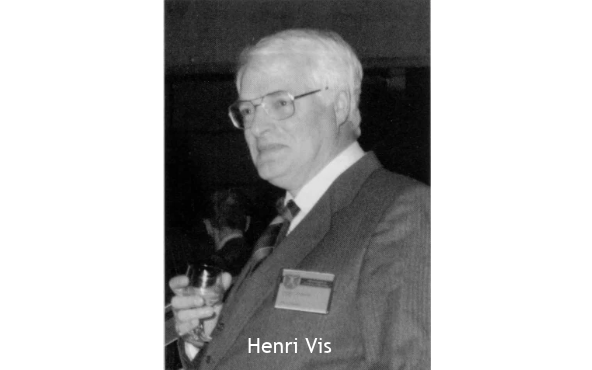
At the Université libre de Bruxelles, this ambition was reflected in particular in the creation of the Paediatrics Laboratory, which was subsequently developed by Professor Henri Vis. He took a particular interest in metabolic and genetic diseases. Together with Professors Dumont, Delange and Ermans, he conducted research into congenital hypothyroidism and subsequently phenylketonuria. Nutrition also occupied a central place in his research, notably through work on childhood malnutrition at Cemubac, the ULB medical centre in Central Africa.
This dual expertise, combining nutrition and metabolism, laid the foundations for a specialty that would reach its full potential at the Children’s Hospital.
The Guthrie revolution: diagnosing before symptoms appear
At the beginning of the 1960s, American microbiologist Robert Guthrie developed a method for screening for phenylketonuria using a few drops of blood dried on filter paper. The stakes were considerable: without treatment, the accumulation of phenylalanine could cause severe neurological damage. When detected very early, the disease can be controlled through a specially adapted diet.
In Belgium, Prof. Henri Vis was one of the pioneers of this revolution. As early as 1966, neonatal screening began to develop in the country, before being regulated by a Royal Decree in 1974. Under Henri Vis’s leadership, the ULB Paediatrics Laboratory became one of Belgium’s leading centres for screening infants for metabolic diseases.
The initial methods may seem rudimentary today: Guthrie cards were handled and punched manually, while the analyses relied in particular on microbiological techniques. But the change was fundamental: it became possible to diagnose certain diseases even before symptoms appeared.
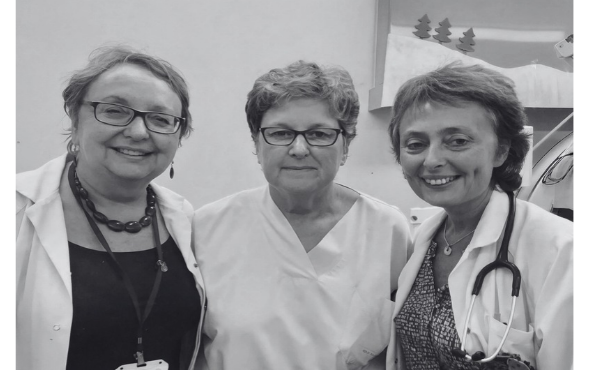
As Dr Corinne De Laet puts it:
“ The diseases already existed; it was our ability to detect them that changed profoundly. ”

1986: a hospital entirely dedicated to children
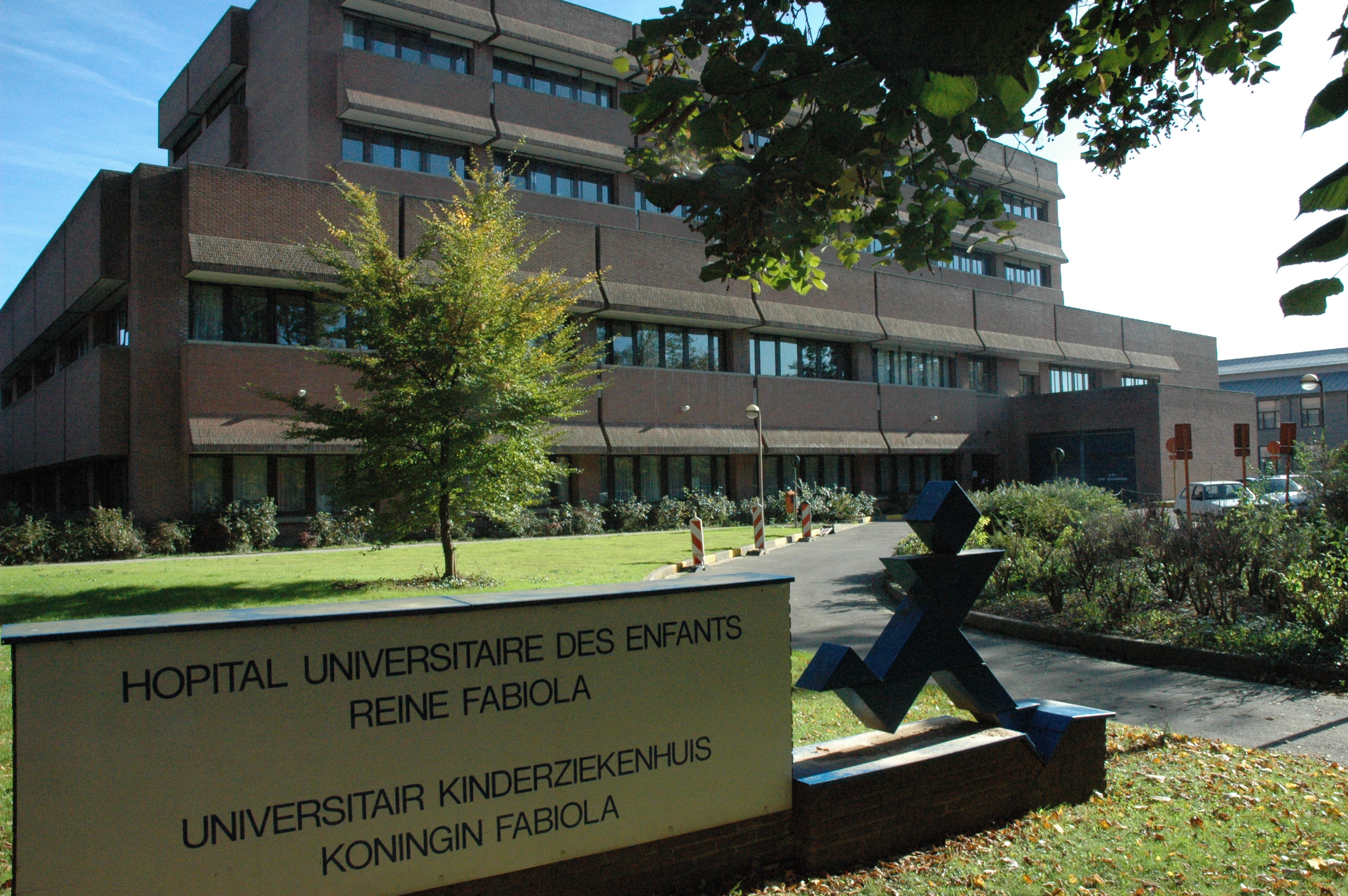
When HUDERF opened its doors in 1986, this scientific history became part of an unprecedented hospital project: a fully-fledged university hospital entirely dedicated to children and adolescents.
This concentration of expertise changed the way of working. Children with a metabolic disease could now be cared for by paediatricians, biologists, dietitians, geneticists, neurologists, gastroenterologists and many other specialists.
Professor Henri Vis embodies this continuity between the university paediatrics that preceded HUDERF and the paediatrics that developed within the new hospital. Professor André Kahn, who subsequently became head of paediatrics, notably strengthened the links between clinical practice, research and teaching. Professor Philippe Goyens, for his part, contributed to the development of paediatric gastroenterology, nutrition and metabolism.
Nutrition: an integral part of care
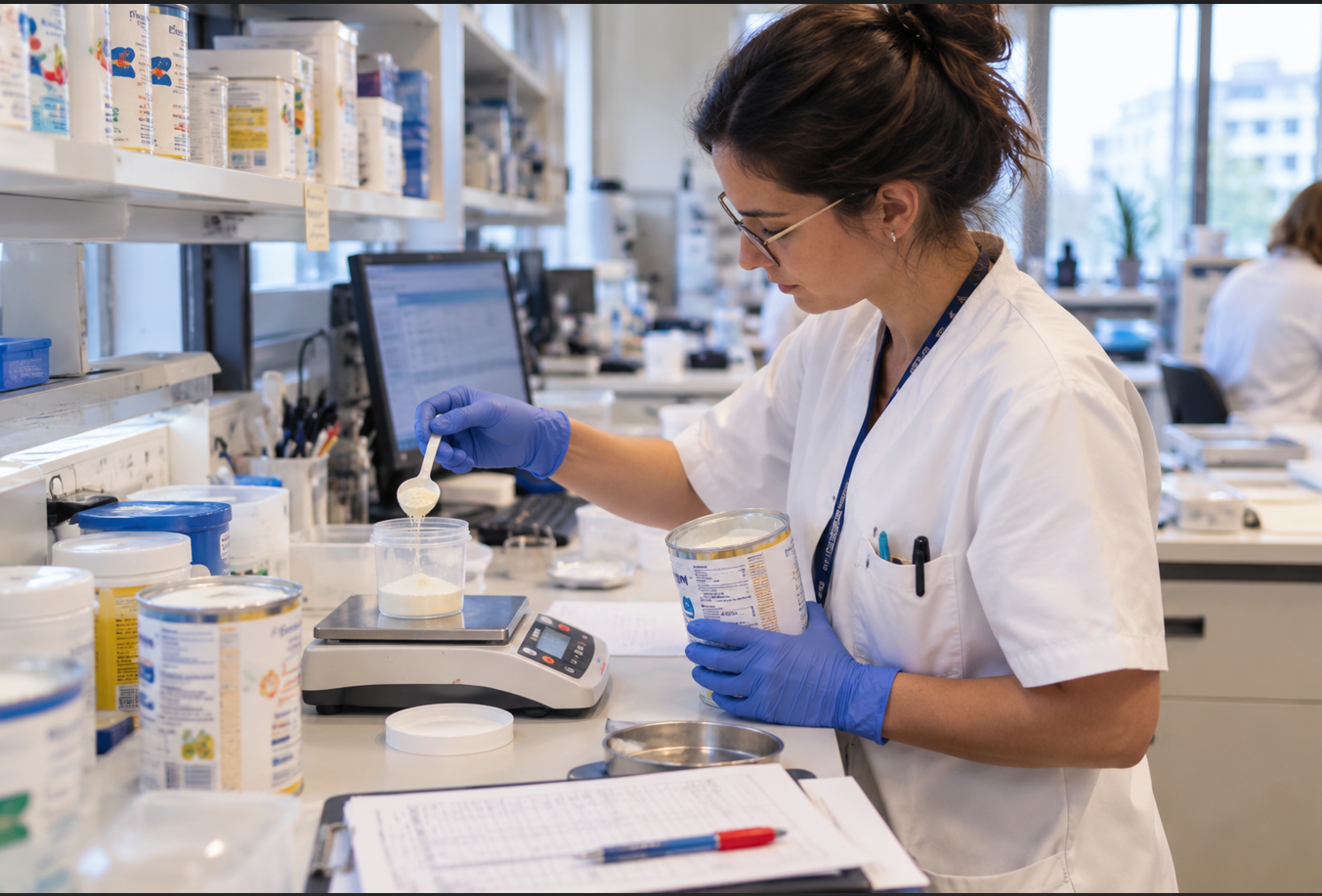
At HUDERF, nutrition is not limited to the treatment of metabolic diseases. From the hospital’s opening in 1986, a team comprising dietitians and a paediatric nutritionist supported hospitalised children. Over time, nutrition became established as an essential component of care: preventing malnutrition, adapting intake to each child’s needs, and promoting growth and recovery. In 2005, a study conducted in two hospital units revealed the extent of nutritional risk among young patients. Published the following year by a team including Professor Philippe Goyens and Dr Corinne De Laet, it highlighted the need for nutritional screening and coordinated care involving doctors, dietitians, nurses and pharmacists.
“For some metabolic diseases, nutrition plays a role that is just as important as medication”
Dr Corinne De Laet.
Treatment thus becomes part of every aspect of the child’s life: at home, at school, during holidays or birthday celebrations. Dietitians, psychologists, doctors and families work together to control the disease while enabling the child to grow and live as normally as possible.


From biochemistry to genetics: seeing what was invisible
From the 1990s onwards, and especially from the 2000s, the discipline expanded considerably. Tandem mass spectrometry transformed screening and metabolic analysis, while molecular genetics gradually opened a window onto the very origins of diseases. Whereas physicians once had to start from symptoms and consider multiple hypotheses, it became increasingly possible to identify the metabolic pathway involved with growing precision, and sometimes even the responsible gene.
The number of known diseases increased considerably. They were not new: medicine was learning to recognise them. For families, this revolution could bring an end to years of diagnostic wandering. It also made it possible to better understand familial risks and, increasingly often, to adapt treatment to the precise mechanism of the disease.
Treatments that now target the disease
For a long time, treating a metabolic disease mainly meant circumventing the faulty mechanism: modifying the diet, avoiding fasting, providing a missing nutrient or eliminating a toxic substance. These strategies remain essential, but the therapeutic arsenal has expanded considerably. For some diseases, enzyme replacement therapies can now replace a deficient enzyme. Other medicines act directly on a metabolic pathway.
Gene therapies are extending this development by opening up the prospect, for certain conditions, of acting as close as possible to the genetic abnormality itself. Not all metabolic diseases have such treatments, of course, but precision medicine is gradually bringing treatment closer to the cause of the disease.
Growing up with the disease and becoming an adult
There is another way to measure the progress achieved: by looking at what becomes of patients. Thanks to screening, therapeutic nutrition and new treatments, many children with rare metabolic diseases now reach adulthood, pursue their studies, work and build their own lives.
This medical success has brought a new challenge to light: organising the transition to adult medicine. For Corinne De Laet, this is an essential issue. Diseases do not disappear on a patient’s 18th birthday: the expertise accumulated during childhood must continue, while gradually supporting the young person towards greater autonomy.
Forty years later, the same ambition
In 2026, the manually punched cards used in the first screening programmes seem to belong to another world. Mass spectrometry, genetics, enzyme replacement therapies and new treatments have profoundly transformed the specialty. But the principle that guided the pioneers remains the same: detect the disease as early as possible, understand its mechanism and intervene before its consequences become irreversible.
Today, this expertise continues within H.U.B, where collaboration between the Children’s Hospital, Erasme Hospital, the laboratories and the various adult specialties can help ensure continuity of care pathways.
From Robert Dubois to Henri Vis, and from Philippe Goyens to Corinne De Laet, this history ultimately illustrates the evolution of paediatrics as a whole: from a medicine that intervened when the disease became apparent to a medicine capable of looking for it before the first symptoms, identifying its origin and, progressively, acting as close as possible to its cause.
Nutrition and Metabolism Clinic (Pediatric) | Queen Fabiola Children’s University Hospital
Metabolic diseases | Queen Fabiola Children’s University Hospital


1950s — The university origins
Professor Robert Dubois establishes the ULB Paediatrics Laboratory, which is subsequently developed by Professor Henri Vis.
1966 — The beginnings of newborn screening
Professor Henri Vis is one of the pioneers of metabolic disease screening in Belgium, particularly for phenylketonuria using the Guthrie test.
1974 — Screening becomes structured
A Royal Decree establishes a framework for the accreditation and funding of centres screening for congenital metabolic disorders.
1986 — HUDERF opens
Expertise in nutrition and metabolic diseases develops within a university hospital entirely dedicated to children.
1988 — Scientific continuity
Professors Henri Vis and Philippe Goyens co-author a scientific publication on phenylketonuria.
2006 — New therapeutic perspectives
Dr Corinne De Laet and Professor Philippe Goyens publish a review of progress and challenges in inherited metabolic diseases.
2000s–2020 — The rise of precision medicine
Mass spectrometry, molecular genetics and targeted treatments gradually transform the diagnosis and management of metabolic diseases.
2026
Expertise that continues to evolve, encompassing new therapies, specialised nutrition and support for patients through to adulthood.
Further information
https://www.amub-ulb.be/system/files/rmb/old/327?utm_
cvchercheurs.ulb.ac.be/Site/unite/ULB224.php?utm_
https://pubmed.ncbi.nlm.nih.gov/5494739/
https://pubmed.ncbi.nlm.nih.gov/3064840/
https://www.amub-ulb.be/revue-medicale-bruxelles/277?utm
https://www.amub-ulb.be/system/files/rmb/old/320?utm